Looney Tunes
Revitalizing America's Classic Cartoon Brand
Our Work
Looney Tunes is one of Warner Brothers’ most historic and valuable brands. Its appeal had attracted some 275 companies who had licensed the use of the Looney Tunes brand on more than 1,500 products around the world.
Yet with this success, there were challenges. Because the licensees were independent and the range of products was increasingly varied, it became harder and harder to maintain even a semblance of brand consistency, both at the core identity and application levels. Further, as the brand entered more foreign markets, there were concerns that some of the brand’s characters that made up the Looney Tunes logo expression may have cultural conflicts.
Finally, this $2 billion brand had immense equity, yet parent Warner Brothers failed to fully leverage this, as the Looney Tunes brand had no linkage to it.
Research revealed that the Bugs Bunny character had universally strong awareness and appeal across all markets served. In fact, the study showed that Bugs beat out Mickey Mouse on both dimensions. Bugs also best represented and reinforced the brand’s “classic & irreverent” positioning.
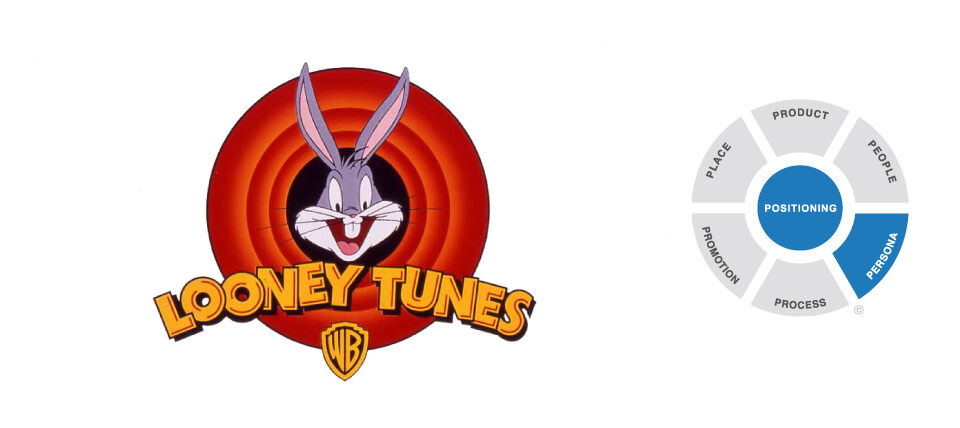
Thus, Bugs formed the foundation for the new logo brand expression. This was matched with two other classic identity elements from Looney Tunes’ past: the vertical concentric rings that ushered in the beginning of each cartoon, and the “toy-block” typeface.To ensure that the parent company received due credit, the WB shield endorsement was favored over any typographic “Warner Brothers” treatment. The shield was both “classic” and also complemented the typographic Looney Tunes expression.
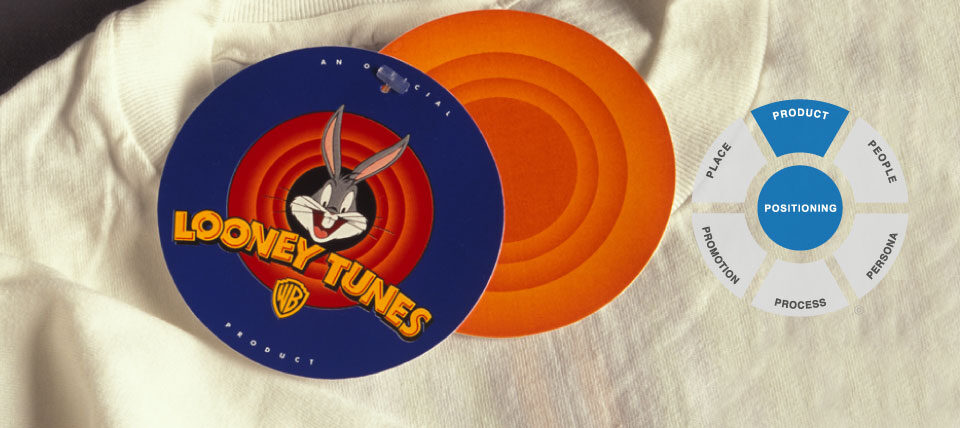
The new brand expression was then extended to a consistent but flexible packaging system that was reinforced through graphic standards. The new system with design templates not only built a much more consistent brand image, but also enabled manufacturers to bring products to market faster.
The new brand received such favorable support within Warner Brothers that the new logo and design was extended across the entire range of brand touch-points, from the company’s 150 studio stores to its theme parks. The success of the work also led to similar assignments for both the Batman and Superman brands, held within the Warner Brothers brand portfolio.
This work was led by Charles Rashall while employed at Landor Associates.